

Most organizations do not fail on the night of the event. They plateau long before that, then spend the final week proving it.
A gala, auction, or benefit can only raise what the room and the offer will support.
If the same donors see the same items, the same show, and the same ask year after year, the result levels off. That plateau is not a mystery. It is the ceiling of the current plan. Breaking it takes a real change: stronger auction items, a clearer story of the change the charity exists to create, and a guest list of people who have both the means and the desire to invest in that change. Philanthropy, at its best, is exactly that.
People with disposable income choosing to fund the world they want to see.
Getting those people into the room is only half the work. The other half is show flow and timeline, and most teams treat both as a night-of problem.
Show flow is the experience once the doors open: pacing, transitions, the auction, the ask, the energy in the room.
Timeline is everything that has to be true before that night can work. Committees blur the two, then discover in the final days that procurement, seating, scripts, volunteer roles, and follow-up are still open. The last week becomes a scramble. People stop sleeping. They snap at volunteers, vendors, and each other. The room feels it before a single bid is placed.
The fix is a hard deadline at least seven days out.
By then, the event should already be built. The week of the event is not for inventing the night. It is for audience development among the people you have already recruited, and for the fine touches. Icing on the cake. Confirmations. Hospitality. The small signals that tell a guest they were expected and that the organization is steady.
That steadiness is not a soft skill. It is a revenue skill.
A sleep-deprived, frantic host creates havoc, and guests register it even when no one says a word. A calm host who is genuinely grateful creates the opposite atmosphere. Gratitude is not a slogan for the program. It is the posture of the people running the room.
There is a useful distinction here…
Privilege and entitlement can look similar from the outside.
Someone may have grown up with resources, or sit on a board, or write a large check. Privilege, held with gratitude, makes a person good to be around. Entitlement assumes the same advantages as a right and skips the thanks. Guests and donors can tell the difference. So can the staff and volunteers who have been living inside the last-week panic.
If you want the night to raise more, protect the week before it. Finish the work early. Spend the final days on the people already coming, and on the details that make the experience feel considered. Then show up grateful for the philanthropists in the room, not entitled to their support.
The timeline gets you ready. The gratitude is what they feel when they arrive.
Ready to Raise More at Your Next Event?
If your school, nonprofit, hospital foundation, or charity is planning a fundraising auction and you want an auctioneer who still gets goosebumps every time the bidding starts, I would be honored to help.
Scott Robertson, CAI, BAS Founder & Chief Auctioneer
Champion Fundraising Auctions
Serving Nonprofits Nationwide
📞 (239) 246-2139
🌐 www.championauctioneer.com
Let’s make your next auction the one people never forget.
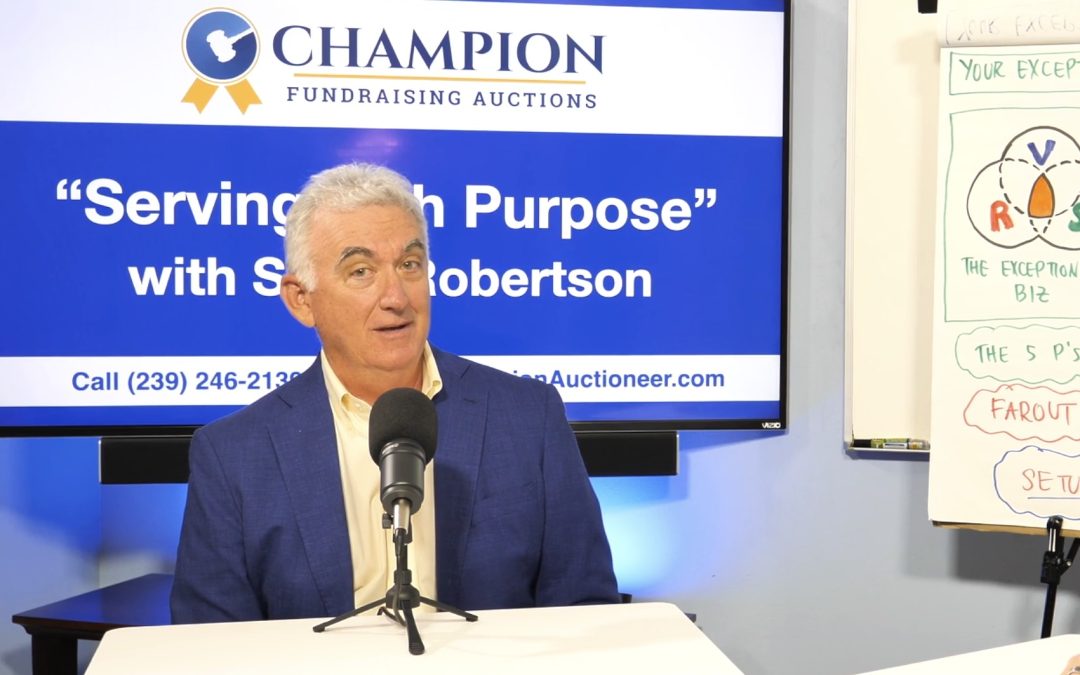
Watch me tell this story from this clip from our “Serving with Purpose” Podcast!